
 HFD Team
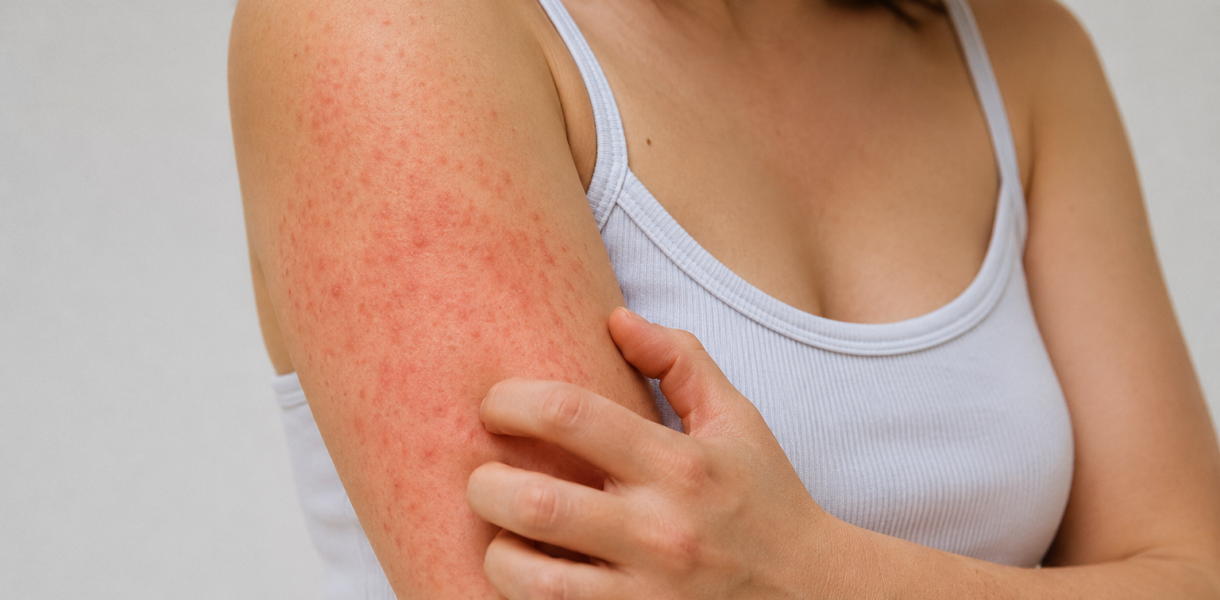
 Skin rashes are very common and can affect people of all ages. They may appear as redness, itching, bumps, dryness, or irritation on the skin. While many rashes are harmless and go away on their own, others can signal infections or more serious health conditions that require medical attention.
This guide explains what skin rashes look like, the most common types, their causes, symptoms, and how to treat them safely.
What Do Skin Rashes Look Like?
Skin rashes vary widely in appearance. Some look like red or inflamed patches, while others appear as raised bumps, flaky skin, or fluid-filled blisters. Many rashes cause itching or irritation, and some may feel painful or warm to the touch. In certain cases, the rash may spread quickly across the body, which can be a sign that medical attention is needed.
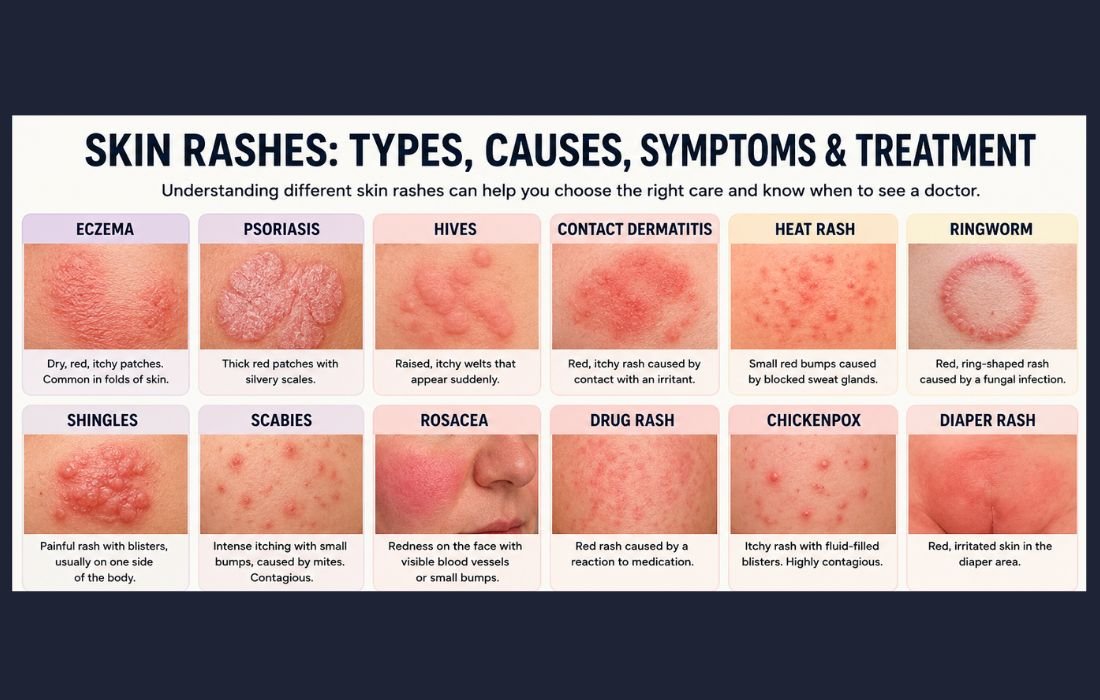
Types of Skin Rashes Explained
Different rashes have different causes and appearances, which is why identifying the type is important.
Eczema usually appears as dry, red, and itchy skin that may crack or become rough over time. It often affects the hands, face, elbows, and knees and is commonly linked to allergies or sensitive skin.
Psoriasis causes thick, red patches covered with silvery-white scales. These patches are commonly found on the elbows, knees, and scalp and are linked to an overactive immune system.
Hives appear as raised, itchy welts that can develop suddenly due to allergic reactions. They often disappear within hours but may return if the trigger remains.
Contact Dermatitis occurs when the skin reacts to substances like soaps, perfumes, or chemicals, leading to redness, itching, and sometimes blisters.
Heat Rash develops in hot and humid conditions when sweat gets trapped in the skin, causing small red bumps and a prickly sensation.
Ringworm is a fungal infection that forms a circular rash with clearer skin in the center and can spread if untreated.
Shingles causes a painful rash with blisters, usually appearing on one side of the body. It is linked to the reactivation of the chickenpox virus and often requires medical treatment.
Scabies is caused by tiny mites that burrow into the skin, leading to intense itching and small bumps, especially at night. It is contagious and requires treatment.
Rosacea mainly affects the face, causing redness, visible blood vessels, and sometimes small bumps. It is not contagious but can worsen with triggers like heat or stress.
Drug Rash can appear after starting a new medication and may range from mild redness to severe allergic reactions.
Chickenpox causes an itchy rash with fluid-filled blisters and is more common in children. It is highly contagious.
Diaper Rash affects babies and appears as red, irritated skin in the diaper area, often caused by moisture or friction.
Cellulitis is a more serious condition that causes red, swollen, and painful skin that may feel warm. It requires prompt medical treatment.
Rash Urgency and When to Act
Some rashes are harmless, while others need urgent care. The table below helps you quickly understand the difference.
|
Rash Type |
Contagious? |
Needs Doctor? |
|
Eczema |
No |
Usually no |
|
Psoriasis |
No |
Sometimes |
|
Hives |
Sometimes |
If severe |
|
Contact Dermatitis |
No |
Rarely |
|
Heat Rash |
No |
No |
|
Ringworm |
Yes |
Yes |
|
Shingles |
Yes (limited) |
Yes |
|
Scabies |
Yes |
Yes |
|
Rosacea |
No |
Sometimes |
|
Drug Rash |
No |
Yes (urgent if severe) |
|
Chickenpox |
Yes |
Yes |
|
Diaper Rash |
No |
Rarely |
|
Cellulitis |
No |
Urgent |
As a general rule, you should seek medical help if a rash spreads quickly, becomes painful, is accompanied by fever, or shows signs of infection such as swelling or pus.
Common Causes of Skin Rashes
Skin rashes can be triggered by allergies, infections, chronic skin conditions, heat, or reactions to medications. In some cases, they may also be a symptom of a more serious illness, such as an autoimmune condition or a severe allergic reaction. This is why persistent or unusual rashes should not be ignored.
Symptoms of Skin Rashes
Most rashes involve redness, itching, or irritation. Some may cause swelling, dryness, or flaking, while others produce blisters or oozing. Pain, warmth, or rapid spreading can indicate a more serious issue that requires medical attention.
Skin Rashes in Children vs Adults
Skin rashes can appear differently depending on age. In children, rashes like chickenpox, diaper rash, and heat rash are more common due to sensitive skin and developing immune systems. These are often mild but can spread quickly.
In adults, rashes are more likely to be linked to chronic conditions like eczema or psoriasis, allergic reactions, or infections such as shingles. Adults are also more likely to experience medication-related rashes or more serious bacterial infections like cellulitis.
How to Treat Skin Rashes
Treatment depends on the cause, but mild rashes can often be managed at home by keeping the skin clean, avoiding irritants, and using gentle skincare products. Over-the-counter creams and antihistamines can help reduce itching and inflammation.
More serious rashes may require prescription treatments such as antibiotics, antifungal medications, or stronger topical creams. Conditions like cellulitis, shingles, or severe drug reactions should always be treated by a healthcare professional.
When to See a Doctor
You should seek medical attention if the rash spreads quickly, becomes painful, or is accompanied by fever. Signs of infection, such as swelling, warmth, or pus, should not be ignored. Any rash that lasts more than a few weeks or appears suddenly after taking medication should also be checked.
Conclusion
Skin rashes are common and often harmless, but they can sometimes indicate infections or more serious health issues. Understanding the type of rash and its symptoms is important for choosing the right treatment.
In simple terms, some rashes can be managed at home, while others require medical attention. Paying attention to warning signs and acting early can help prevent complications and ensure proper care.
FAQ
Is my rash contagious?
Some rashes, such as ringworm, scabies, and chickenpox, are contagious and can spread through contact. Others, like eczema or psoriasis, are not contagious.
How long do rashes usually last?
Mild rashes may clear up within a few days, while others can last for weeks or longer depending on the cause.
Can stress cause a rash?
Yes, stress can trigger or worsen certain skin conditions, including eczema, hives, and rosacea.
Can a rash be a sign of something serious?
In some cases, yes. A rash with fever, pain, or rapid spreading may indicate an infection or a more serious condition and should be checked by a doctor.
Also Read : Red bumps On neck | Causes of Red Spots on Your Neck