
 HFD Team
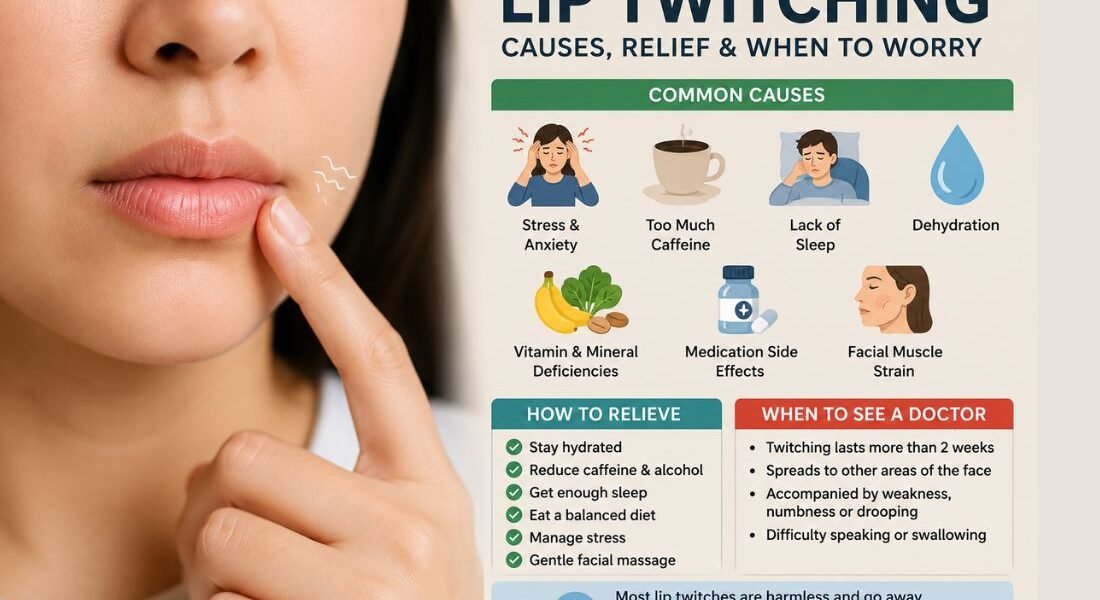
 A sudden flutter in your upper or lower lip can be surprising, especially if it keeps happening throughout the day. In most cases, lip twitching is temporary and harmless, often triggered by stress, fatigue, excessive caffeine intake, or dehydration.
If, however, the twitching persists for weeks, affects other facial muscles, or occurs in conjunction with muscle weakness or difficulty speaking, the situation must be assessed by a physician.
The common reasons for lip twitching, its possible association with vitamin deficiencies, and ways to treat it with home remedies, as well as the right time to contact a physician.
What Is Lip Twitching?
Lip twitching refers to a type of involuntary movement during which the muscles located near the lips contract unconsciously. Often, this involuntary move affects the upper or lower lip and gives you an impression of a gentle fluttering or repeated contractions for a brief period of time, from several seconds to several days.
Although it can feel concerning, isolated lip twitching is usually not a sign of a serious neurological condition.
What Does Lip Twitching Feel Like?
People describe lip twitching differently. Common symptoms include:
- A gentle fluttering or vibrating sensation
- Small, repetitive muscle contractions
- Twitching on one side of the upper or lower lip
- Intermittent episodes that come and go
- Mild discomfort without pain
If twitching is accompanied by facial drooping, slurred speech, muscle weakness, or difficulty swallowing, seek medical attention immediately.
Can Vitamin Deficiency Cause Lip Twitching?
Yes. In some cases, nutritional deficiencies may contribute to muscle twitching.
Magnesium: Helps muscles relax. Low levels may increase muscle excitability.
Vitamin B12: Supports healthy nerves. Deficiency may cause twitching, numbness, or tingling.
Potassium: Essential for proper nerve signaling and muscle contractions.
Calcium: Plays a key role in muscle movement. Low calcium levels may contribute to muscle spasms.
A diverse diet that includes vegetables, nuts, seeds, dairy, fish, eggs, legumes, and fruit supports the proper functioning of nerves and muscles. If a deficiency is suspected, a doctor may recommend blood tests before recommending any supplements.
Can Anxiety Cause Lip Twitching?
Yes. Anxiety is one of the most common reasons people experience temporary lip twitching. During periods of stress, the body releases hormones that increase nerve activity and muscle tension. Anxiety can also reduce sleep quality and increase caffeine consumption, making twitching more noticeable.
Managing stress through regular exercise, mindfulness, deep breathing, and adequate sleep often helps reduce episodes.
Less Common Causes
While most cases are harmless, persistent lip twitching can occasionally be linked to:
- Recent dental procedures or facial nerve irritation
- Temporomandibular joint (TMJ) disorders
- Recovery after Bell’s palsy
- Thyroid disorders
- Electrolyte imbalances
- Rare neurological conditions affecting facial nerves
These causes are much less common than stress, fatigue, or caffeine.
How Doctors Diagnose Persistent Lip Twitching
If lip twitching continues for several weeks or is accompanied by other symptoms, your doctor may:
- Review your medical history and medications.
- Perform a neurological examination.
- Order blood tests to check vitamin and electrolyte levels.
- Evaluate thyroid function if needed.
- Refer you to a neurologist for additional tests, such as an electromyography (EMG), if clinically appropriate.
How to Stop Lip Twitching Naturally
Most mild cases improve with simple lifestyle changes.
- Reduce caffeine, nicotine, and alcohol.
- Aim for 7–9 hours of quality sleep each night.
- Stay hydrated throughout the day.
- Eat a balanced diet rich in magnesium, potassium, calcium, and vitamin B12.
- Practice stress-management techniques such as meditation or deep breathing.
- Apply a warm compress or gently massage the affected area if muscle tension is present.
- Review any medications with your healthcare provider if twitching began after starting a new prescription.
Can Lip Twitching Have a Spiritual Meaning?
Certain cultures consider the twitching of either the left or right corner of the lips to have special meaning, associating it with future events or one’s emotions. There is a wide range of possible interpretations that vary across cultures and are rooted in cultural beliefs. From a medical perspective, the twitching occurs when muscles or nerves are briefly active.
When Should You See a Doctor?
Arrange a medical evaluation if:
- Lip twitching lasts for more than 2 weeks.
- The twitching becomes more frequent or spreads to other facial muscles.
- You develop facial weakness, numbness, or drooping.
- You have difficulty speaking, swallowing, or chewing.
- Twitching occurs after a head injury or with other neurological symptoms.
Conclusion
Lip twitching is typically a short-term, harmless muscular activity that stress, sleep problems, excess caffeine intake, dehydration, and certain vitamin deficiencies can cause. Most episodes improve with adequate rest, fluids, and food, and with avoidance of triggering factors. If twitching persists or degenerates or if accompanied by some weakness of the face or other neurological symptoms, you should see a doctor to discover and cure a potential illness. However, it is possible to minimize or eliminate lip twitching if the causes are fully understood and one adheres to healthy lifestyle principles.
Also Read : How To Take Care Of Your Skin In The Fall