
 HFD Team
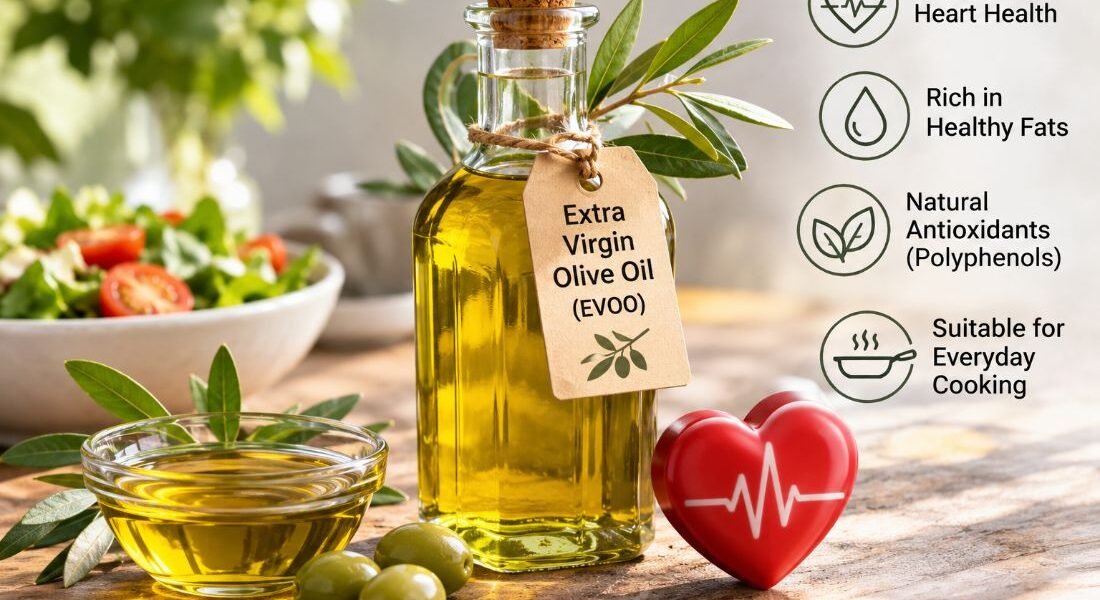
Extra virgin olive oil, or EVOO, has acquired a health halo. It shows up in heart healthy diets, salad dressings, wellness routines, and morning spoonful trends. But does it deserve the hype, or is it just an expensive oil with good marketing?
The answer lies in what actually makes EVOO different: how it’s extracted, how little it’s processed, and the natural compounds it retains. It can be a useful addition to a balanced diet, but calling it a miracle oil stretches the evidence.
Why Everyone’s Talking About EVOO
Olive oil is rich in monounsaturated fat, particularly oleic acid. The FDA notes that replacing fats higher in saturated fat with oils high in oleic acid may reduce coronary heart disease risk, though this evidence is described as supportive rather than conclusive.
EVOO also retains minor compounds like polyphenols, which is one reason it’s nutritionally different from more heavily processed oils. So the real question isn’t just whether EVOO is healthy, but what makes it different from other oils in the first place.
EVOO Isn’t Just Another Name for Olive Oil
Olive oil isn’t one single category. According to the International Olive Council, extra virgin olive oil is obtained through mechanical or physical methods only, without any treatments that alter the oil, and must meet strict chemical and sensory standards, including free acidity under 0.8g per 100g.
Regular olive oil, by contrast, is often a blend of refined and virgin oils. Refining changes the oil’s characteristics, so regular olive oil and EVOO shouldn’t be treated as identical products. Extra virgin is a defined quality category, not just a premium word on a label.
From Olive to Bottle
Virgin olive oils come from mechanically pressing or physically processing olives, including washing, decanting, centrifuging and filtering, with no chemical refining involved. This minimal processing helps preserve phenolic compounds (polyphenols) naturally present in olives.
It also explains why good EVOO tastes different from the neutral oils common in Indian kitchens. Depending on olive variety and origin, it can taste fruity, bitter, or peppery, and these aren’t signs of spoilage but part of its official sensory classification.
What Makes It Different From Other Cooking Oils?
EVOO combines a high proportion of monounsaturated fat with naturally occurring compounds from the olive. That doesn’t automatically make it healthier than sunflower, mustard, groundnut, or canola oil, since each has its own profile. What matters more is what you’re replacing: swapping a saturated fat for EVOO is more meaningful than simply adding EVOO on top of an already calorie rich diet. It also brings flavour, including bitterness, fruitiness and a peppery finish, that makes it great for salads, dips, and finished dishes.
Also Read : health benefits of pumpkin seed oil
Does EVOO Actually Help Your Heart?
When unsaturated fats replace saturated fats in the diet, there can be cardiovascular benefits, and the FDA’s qualified health claim for high oleic oils specifically focuses on replacement, not simply adding more oil. Piling extra spoonfuls of EVOO onto an already unbalanced diet won’t cancel it out. EVOO works best within an overall pattern that includes vegetables, fruits, whole grains, legumes, and nuts. It can contribute to a heart friendly diet, particularly as a replacement for saturated fat, but it isn’t a standalone cure for heart disease.
Does Cooking Destroy Its Benefits?
The idea that EVOO can only be used cold is an oversimplification. It works for sauteing, roasting, and moderate heat cooking; only extremely high heat or prolonged heating affects its quality. It shines especially as a finishing oil, where its flavour and aroma stand out, so using it in a salad or drizzle lets you appreciate those qualities rather than cooking them away.
Is There a Right Age to Start?
No. Someone in their 20s benefits from EVOO the same way someone in their 50s does; it depends on diet and cooking habits, not age. There’s no evidence you need to wait until 40 to start using it.
Why Does EVOO Cost So Much More in India?
EVOO is generally pricier than everyday Indian cooking oils, and imports add costs from sourcing, transport, and packaging. So the real question isn’t whether EVOO is healthy, it’s whether the extra cost is worth it for how you eat and cook. If you enjoy it in salads, roasted vegetables, or Mediterranean style meals, the cost may be justified. For large scale everyday cooking, an economical oil might make more sense. There’s no rule that every oil in your kitchen must become EVOO.
Is the Priciest Bottle the Best?
Not necessarily. Price doesn’t guarantee nutritional quality. Look for the extra virgin designation and information on origin and harvesting rather than assuming any olive oil label is the same thing. Since olive oil is sensitive to light, heat, and oxygen, good packaging and proper storage matter too. Quality is judged through both chemical measurement and sensory evaluation, so a credible product with good storage conditions matters more than price alone.
How Much Do You Actually Need?
More isn’t better; EVOO is still calorie dense. The smarter approach is using it as a replacement for another fat, not an addition to your existing diet. The right amount depends on your overall calorie needs and other fat intake.
What About a Morning Spoonful?
There’s nothing magical about drinking EVOO straight from the spoon; it doesn’t become a different substance or deliver extra benefits. If you enjoy the taste, that’s fine, but it won’t replace a balanced diet, exercise, or medical treatment.
5 Common Misconceptions
- You can’t cook with EVOO. This is false; just manage heat and time.
- EVOO and regular olive oil are the same. They’re not; the IOC defines separate categories.
- The priciest EVOO is the healthiest. Price doesn’t determine quality.
- EVOO is only for older adults. It fits any life stage.
- Drinking it makes it a miracle food. How it fits your overall diet matters far more.
Is EVOO Worth Switching To?
EVOO isn’t magic, and it doesn’t need to be. Its blend of monounsaturated fat, minimal processing, and natural compounds makes it a solid choice when it replaces saturated fat in your diet. For Indian households, the real decision comes down to practicality: if you like the flavour, can afford it, and use it well, it’s a worthwhile addition. The better question isn’t whether EVOO is the healthiest oil in the world; it’s what you’re replacing with it, how you’re using it, and whether you’re actually buying a quality extra virgin olive oil.
Also Read : Oregano Oil and Black Seed Oil