
 HFD Team
 Living with constant fatigue, being underweight, and dealing with everyday stress has made me more aware of how fragile health can feel. When your energy is low and your body does not always feel at its best, even small things like breathing comfort and immunity start to matter more. That is what led me to explore natural remedies that people often turn to for support.
One such remedy that keeps showing up is mullein tea. At first, it just sounded like another trending herbal drink, but when I looked deeper, I realized it has a long history and a very specific purpose. It is not just a trend, but something that has been used for centuries, especially for lung and respiratory health.
What is Mullein Tea and Where Does It Come From
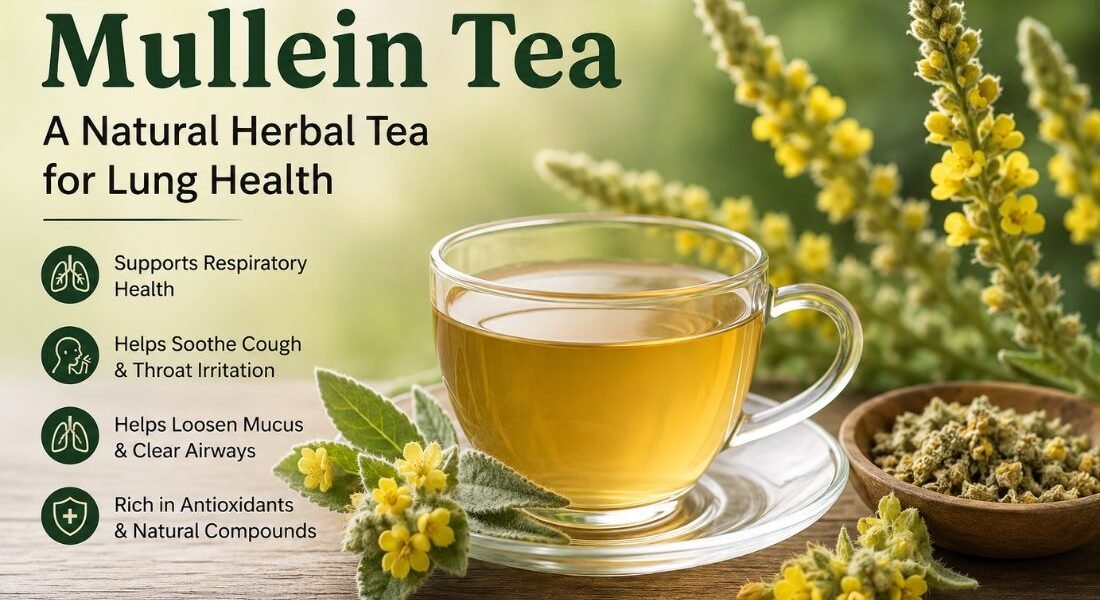
Mullein tea is made from a plant called Verbascum thapsus, commonly known as mullein. It is a tall plant with soft, fuzzy leaves and small yellow flowers, often found growing in open fields and along roadsides.
The plant originally comes from Europe, Asia, and North Africa, but today it grows widely in North America as well. It is not a cultivated plant in most cases, which makes it feel more like a natural or wild herb rather than a commercial crop. Because of its accessibility and long-standing use, it has remained relevant even in modern herbal practices.
A Short History of Mullein
Mullein has been used in traditional medicine for thousands of years. Ancient Greek and Roman healers used it mainly for lung-related problems. It was often recommended for people who had coughs, throat irritation, or breathing issues.
In medieval Europe, it continued to be used as a remedy for respiratory conditions. During a time when medical knowledge was limited, herbal treatments like mullein were among the few available options for relief.
Interestingly, mullein also had a symbolic role in history. Its tall stalks were sometimes dipped in fat and used as torches. Because of this, the plant became associated with light and protection. Over time, however, its medicinal uses became far more important than its symbolic value.
Scientific Perspective and Research
Even though mullein is rooted in traditional medicine, some modern research supports its basic properties.
It is commonly described in herbal science as having anti-inflammatory and soothing effects. This means it may help reduce irritation in the throat and respiratory tract. It is also classified as an expectorant, which means it can help loosen and remove mucus from the lungs.
Some studies also suggest mild antimicrobial properties, indicating that it may help fight certain bacteria or viruses to a limited extent. However, these effects are not strong enough to replace medical treatments.
It is important to note that most of the evidence surrounding mullein comes from traditional use and smaller studies rather than large-scale clinical trials. While there is some scientific support, it is not considered a fully proven medical solution for serious conditions.
What is Mullein Tea Used For
Mullein tea is mainly used for supporting respiratory health. It is commonly consumed by people dealing with cough, cold, or throat irritation.
It is also used for conditions like bronchitis and mild breathing discomfort. Many people drink it to help clear mucus or soothe their throat during illness.
Apart from respiratory uses, it is sometimes taken for its mild calming effect, especially when the body feels irritated. However, its primary association remains with lung and breathing support.
Also Read : What Does It Mean When You Want Orange Juice?
How Does It Work
Mullein contains natural compounds that help relax and soothe the respiratory system. These compounds can make mucus thinner and easier to remove, which is why it is often associated with clearing the chest.
At the same time, it forms a soothing layer over the throat, reducing irritation and discomfort. This dual action of clearing and calming is what makes it useful for cough and breathing-related issues.
However, it is important to understand that mullein tea supports the body rather than directly curing a condition. Its role is more about easing symptoms than providing a complete solution.
How to Make and Use Mullein Tea
Mullein tea is simple to prepare and does not require any complex process. Dried mullein leaves or flowers are typically used for this purpose.
To make the tea, a small amount of dried mullein (about one to two teaspoons) is added to hot water and left to steep for around 10 to 15 minutes. Because the plant has tiny fine hairs, it is important to strain the tea properly using a fine filter or cloth before drinking.
It is usually consumed once or twice a day, especially during periods of cough or throat irritation. Like most herbal teas, it is best used in moderation rather than in excessive amounts.
Possible Side Effects
Although mullein tea is generally considered safe for most people, it is not completely risk-free.
Some individuals may experience mild allergic reactions. The tiny hairs present on the plant can sometimes cause irritation if the tea is not properly filtered. In rare cases, people may feel slight discomfort after consuming it.
There is also limited research on long-term use, so moderation is recommended. Pregnant or breastfeeding individuals should consult a healthcare professional before using it, as safety data is not fully established.
What People Are Actually Saying About Mullein Tea
Beyond traditional use and scientific discussion, it is useful to look at how people describe their real experiences with mullein tea across platforms like Reddit, Quora, and Substack.
On Reddit, many users mention turning to mullein tea during colds or periods of congestion. A common pattern in these discussions is that people notice mild improvements in breathing comfort or mucus clearing, especially when the tea is consumed consistently over a few days. At the same time, several users highlight that the effects are subtle and not immediate, and some report no noticeable changes at all.
On Quora, responses often focus on its background as a traditional remedy. Many contributors describe mullein tea as something that has been used for generations, particularly for respiratory support. However, they also emphasize that it works as a supportive option rather than a primary treatment, and its effectiveness can vary depending on the individual.
Substack writers and wellness bloggers tend to present mullein tea within a broader lifestyle approach. Instead of framing it as a cure, they describe it as one part of a consistent routine where small habits contribute to overall well-being over time. The tone in these discussions is generally balanced, acknowledging both its benefits and its limitations.
Taken together, these perspectives suggest that mullein tea is not seen as a quick or dramatic solution. Instead, it is commonly viewed as a mild, supportive herbal option that may help some individuals when used consistently and with realistic expectations.
Reality Check
Mullein tea is often promoted as a powerful natural remedy, especially online. While it does have traditional and some scientific backing, it is important to stay realistic.
It is not a replacement for medical treatment and does not cure serious respiratory diseases. Its role is supportive, helping the body feel more comfortable during mild conditions like cough or throat irritation.
The increasing popularity of mullein tea is also influenced by social media and the growing interest in natural health solutions. This makes it even more important to separate evidence-based benefits from exaggerated claims.
Final Thoughts
Mullein tea is a strong example of how traditional remedies continue to remain relevant in modern times. It reflects a balance between historical knowledge and current health awareness.
For mild respiratory support, it can be a helpful addition, especially during seasonal illness. However, it should be used with a clear understanding of its limitations.
In the end, the real value of mullein tea lies in knowing what it can realistically offer. It is not a cure, but for some, it may be a small and supportive step toward better comfort and care.
Also Read : 5 Reasons Why Vitamin water Is a Bad Idea for Your Health